Macau Hits 30 Million Visitor Arrivals Mark Early in September 2026
Geschrieben von Tina Roth · 13.9.2026

Macau Hits 30 Million Visitor Arrivals Mark Early in September 2026
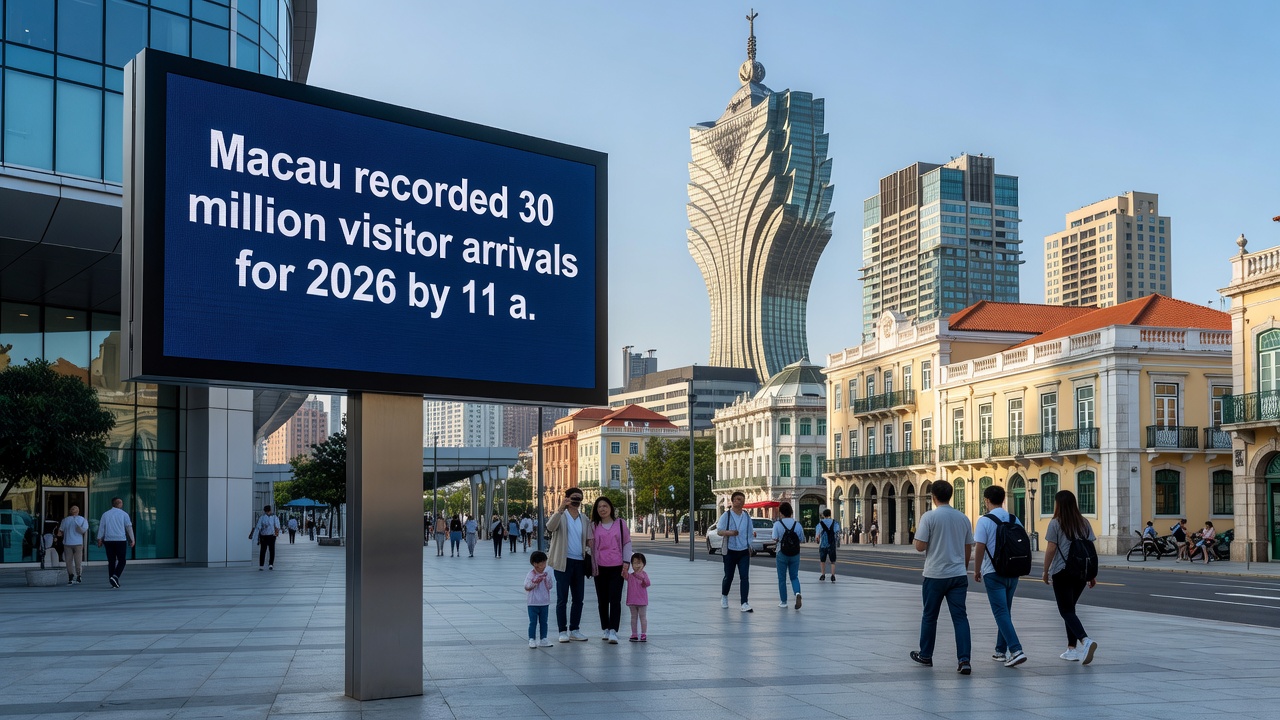
Macau recorded its 30 millionth visitor arrival for 2026 at 11 a.m. on September 11, which placed the milestone 22 days ahead of the same point in 2025. The total reflects an 8% increase compared with the previous year, and the figures come from official tourism tracking that monitors arrivals through airports, land borders, and ferry terminals. Mainland China continued to supply the largest share of travelers, representing 74.4% of arrivals during the first eight months of the year.
Timing and Year-on-Year Growth
The early achievement of the 30 million mark stems from sustained summer travel demand that began in June and carried through August. Chinese central government visa policies introduced earlier in 2026 expanded entry options for residents of several provinces, allowing more frequent short trips without additional paperwork. Seasonal patterns also aligned with school holidays and public festivals that typically boost outbound movement from the mainland, and these factors together accelerated the pace of arrivals compared with 2025.
Data compiled through the first eight months shows consistent monthly gains that outpaced the prior year. August alone contributed a notable portion of the cumulative total, as warm weather encouraged leisure travel while business events scheduled in the city added corporate visitors. The combination produced the observed 8% rise and moved the 30 million threshold forward by nearly three weeks.
Source Market Breakdown
Mainland China accounted for roughly three-quarters of all recorded arrivals in the January-to-August period, a proportion that has remained stable across recent years. The remaining share came from Hong Kong, Taiwan, Southeast Asia, and longer-haul markets such as Europe and North America. Within the mainland segment, visitors from Guangdong province continued to form the largest single group because of geographic proximity and frequent high-speed rail connections.
Officials track these numbers through entry card scans and flight manifests, which feed into a centralized database updated daily. The 74.4% mainland figure covers both day-trippers and overnight stays, and the split between the two categories has shifted slightly toward longer visits since visa relaxations took effect. Observers note that this distribution influences hotel occupancy rates and retail sales inside integrated resorts, although the raw arrival count itself does not distinguish length of stay.
Contributing Factors Behind the Increase
Strong summer travel demand emerged as weather patterns across southern China favored weekend getaways. Families took advantage of extended school breaks, while corporate groups scheduled conferences before the autumn peak season. The central government visa measures reduced processing times for certain applicants and expanded the list of eligible cities, which in turn lifted group tour bookings and independent travel alike.
Seasonal patterns also played their usual role. September typically sees elevated movement because of the Mid-Autumn Festival and the National Day holiday period that follows, yet the 30 million threshold was crossed before those events began. This earlier crossing indicates that baseline demand had already risen compared with 2025, when the same total was reached on October 3.
Measurement and Reporting Process
Visitor arrivals are counted each time a traveler passes through immigration, regardless of whether the trip is the first or a repeat visit within the calendar year. The 11 a.m. timestamp on September 11 marks the exact moment the cumulative counter reached 30 million, based on real-time data feeds from border checkpoints. Reports released later in the month will provide further breakdowns by nationality, transport mode, and purpose of visit, yet the headline milestone already stands as recorded.
Those who monitor tourism statistics point out that an 8% year-on-year gain aligns with broader regional recovery trends observed since 2024. The same reports show that Macau's arrival growth has outpaced several neighboring destinations that rely on similar source markets, although direct comparisons require careful adjustment for differing visa regimes and transport infrastructure.
Conclusion
The 30 million visitor arrival recorded on September 11, 2026, illustrates how visa policy adjustments, summer scheduling, and longstanding seasonal rhythms can combine to shift annual totals forward. Mainland China remains the primary driver at 74.4% of the first eight months, while the overall 8% increase moved the milestone ahead by 22 days relative to 2025. Updated figures will continue to arrive through the remainder of the year, yet the September crossing already supplies a clear reference point for tracking 2026 performance against prior periods.