Mapping Cultural Influences on Reward Allocation Patterns Across Global Online Gaming Platforms
Geschrieben von David Sullivan · 8.11.2026
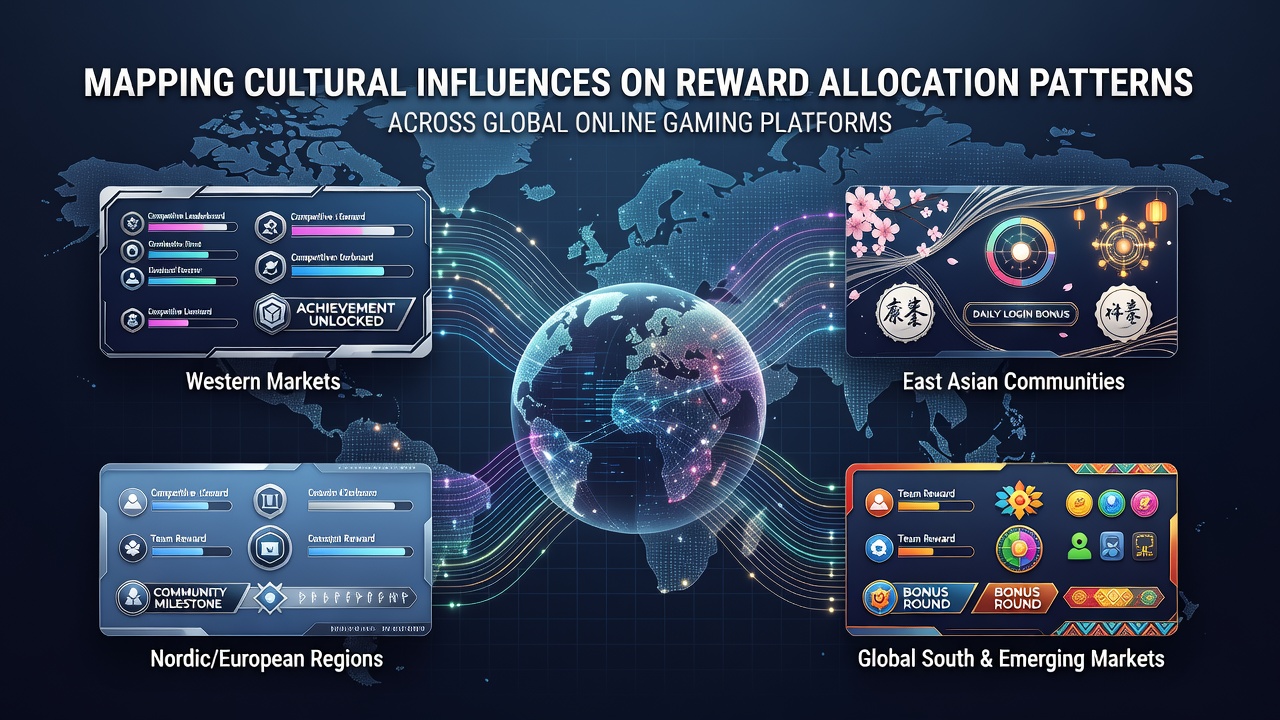
Mapping Cultural Influences on Reward Allocation Patterns Across Global Online Gaming Platforms
Online gaming platforms operate across borders yet reward systems reflect deep cultural patterns that shape how players receive, share, and value in-game items, achievements, and currency. Researchers tracking allocation mechanisms in major titles have documented consistent differences between regions where individual achievement drives design choices and those where group harmony influences distribution rules. These patterns emerge in everything from loot box mechanics to daily login bonuses, and they affect player retention rates across markets.
Cultural Dimensions in Reward Design
Collectivist societies often favor systems that distribute rewards through shared events or clan-based achievements, whereas individualist markets emphasize personal milestones and direct competition for unique items. Studies conducted on platforms popular in East Asia show higher participation in cooperative reward pools that benefit entire teams, while North American and European servers record stronger engagement with solo challenge ladders that grant exclusive cosmetics or currency. Platform operators adjust these structures based on regional user data rather than applying uniform global rules.
November 2026 figures from multiple analytics firms revealed that titles incorporating culturally adapted reward tiers experienced steadier monthly active user growth in target regions compared with those using single-model systems. Developers now routinely segment reward algorithms by player location and language settings to align with local expectations around fairness and status signaling.
Regional Case Patterns
In markets influenced by Confucian values, reward allocation frequently ties to long-term progression and social recognition within established groups, leading to mechanics such as guild contribution logs that unlock collective benefits. European platforms, by contrast, show stronger emphasis on transparent random allocation systems that allow any player equal chance at high-value items regardless of social ties. Australian and Canadian gaming data indicate hybrid approaches that blend competitive leaderboards with occasional community events, reflecting multicultural player bases within single servers.
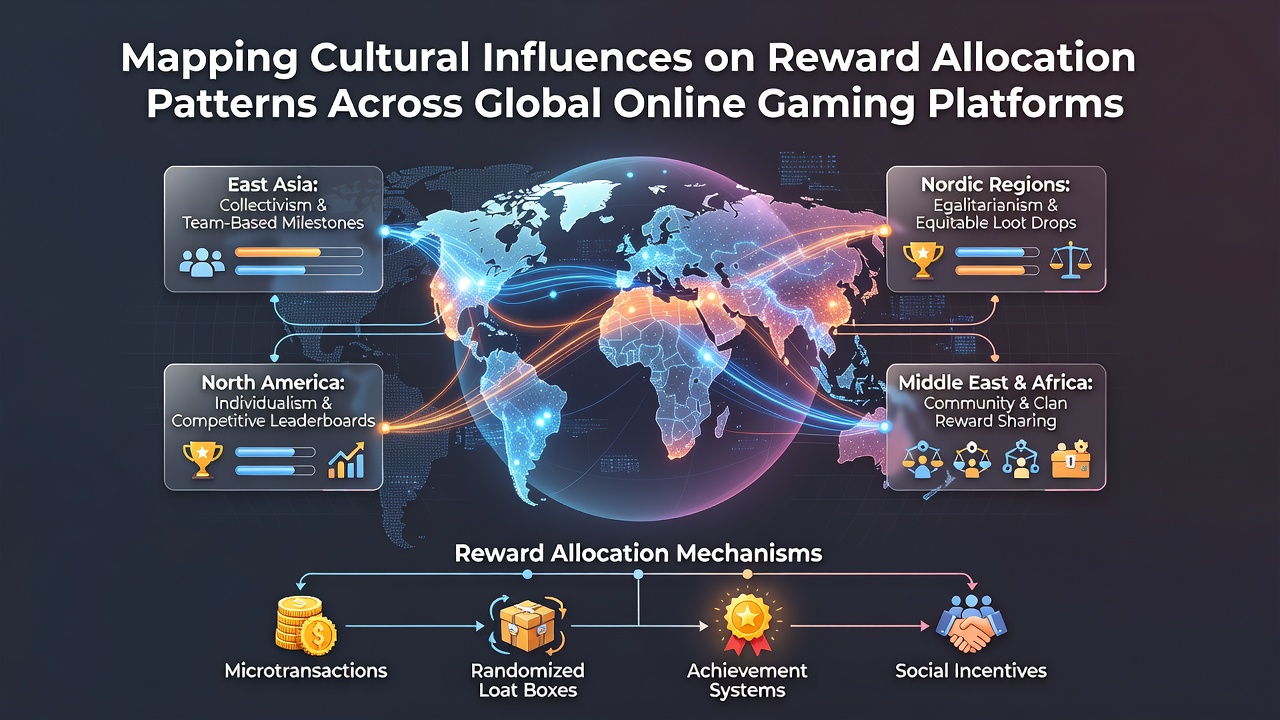
One study released by the Korea Creative Content Agency examined reward uptake in mobile titles and found that players in high-context cultures responded more positively to narrative-driven rewards tied to character relationships than to purely numerical upgrades. Meanwhile, platforms serving lower-context cultures recorded higher completion rates for achievement lists that emphasize quantifiable personal records.
Platform Adaptation Strategies
Global operators now employ localization teams that review reward frequency, visibility, and social sharing features before regional launches. These teams analyze player behavior logs to determine optimal ratios of guaranteed versus chance-based rewards, adjusting for cultural tolerance of uncertainty. Some studios run parallel test servers in different countries to measure how changes in allocation transparency affect session length and social interaction metrics.
Trade associations such as the Entertainment Software Association have published aggregated reports showing that culturally mismatched reward systems correlate with elevated churn rates within the first 90 days of a game's regional release. Companies respond by implementing modular reward engines that can swap distribution logic without altering core gameplay loops.
Emerging Data Trends in Late 2026
Analytics released during November 2026 highlighted rising cross-cultural player migration, prompting platforms to introduce account-level reward preferences that travel with users across servers. This development allows individuals from collectivist backgrounds to maintain group-oriented reward histories even when playing on servers dominated by individualist mechanics. Researchers continue to monitor whether such flexibility reduces friction or introduces new complexities in competitive integrity.
Conclusion
Mapping these cultural influences reveals that reward allocation functions as a localized design element rather than a universal feature across global online gaming platforms. Continued collection of region-specific behavioral data supports incremental refinements that align systems with player expectations shaped by broader societal values.