Tracing Player Retention Patterns Linked to Initial Offer Structures in Regulated Online Platforms
Geschrieben von Vera Franke · 22.11.2026

Tracing Player Retention Patterns Linked to Initial Offer Structures in Regulated Online Platforms
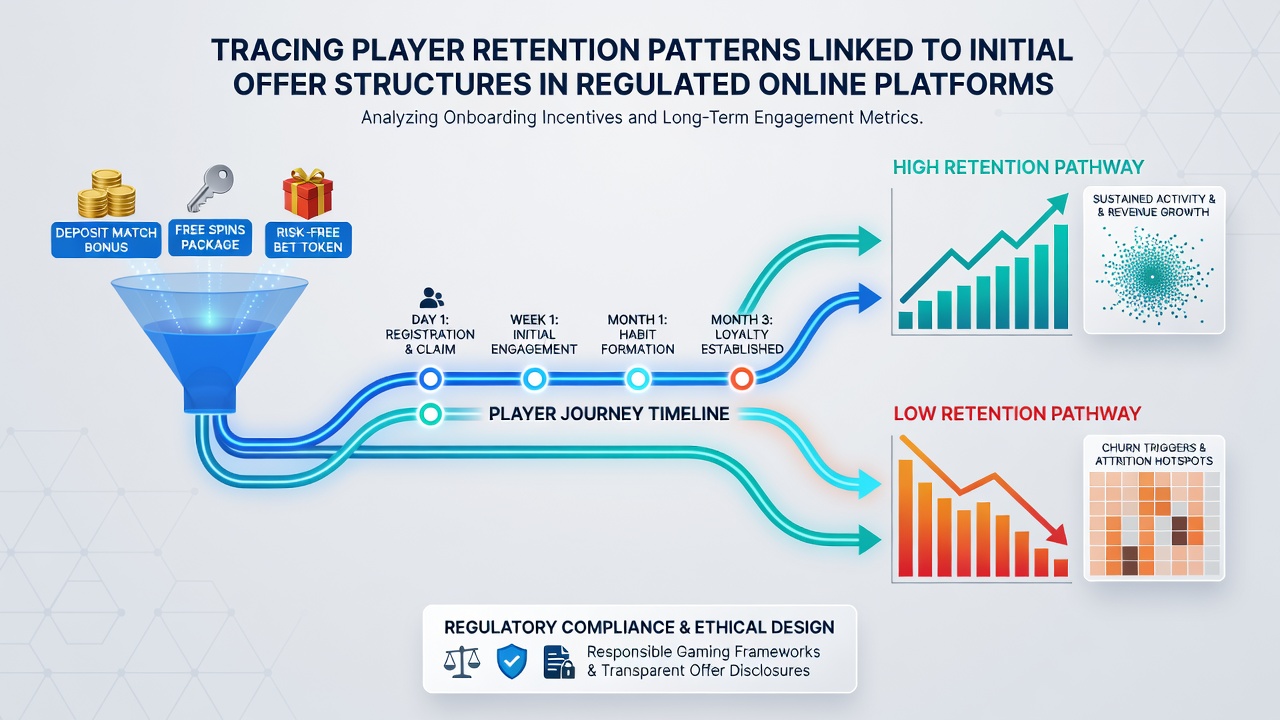
Initial offer structures in regulated online platforms encompass welcome bonuses, deposit matches, free spins, and cashback incentives that operators deploy at account registration; these elements shape early engagement metrics and subsequent retention curves according to aggregated industry datasets. Researchers tracking cohort behavior note that players who receive matched deposits up to certain thresholds demonstrate extended session lengths during the first thirty days, while those allocated free spin packages often exhibit quicker initial activity followed by variable return rates. Data from multiple jurisdictions reveals distinct patterns where the ratio of bonus value to wagering requirements influences whether participants maintain activity beyond the promotional window.
Mapping Offer Components to Retention Metrics
Operators structure offers with varying combinations of percentage matches, maximum caps, and playthrough multipliers, each tied to specific game categories that contribute differently toward completion. Studies compiled across North American and European markets show that platforms offering lower wagering thresholds on initial deposits correlate with higher thirty-day retention figures, whereas high-multiplier requirements tend to produce steeper drop-off after the bonus expires. In November 2026, regulatory filings from several Canadian provinces indicated that platforms adjusting match percentages downward while extending validity periods recorded steadier monthly active user growth compared to prior quarters.
Those who examine transaction logs find that free spin allocations tied to popular slot titles generate immediate engagement spikes, yet conversion to ongoing deposits depends heavily on the underlying volatility settings and payout frequency of the featured games. Observers analyzing anonymized datasets note that players encountering low-volatility options during the onboarding phase display more consistent return visits than cohorts exposed exclusively to high-volatility selections.
Regional Variations in Offer Design and Outcomes
Regulated environments impose distinct caps on bonus sizes and disclosure rules that affect how operators calibrate initial incentives. Australian regulatory reports highlight that platforms adhering to strict advertising standards for promotional terms experience different retention trajectories than those in markets with lighter disclosure mandates. A link to Ontario's iGaming data portal provides monthly aggregates showing retention differentials across offer types deployed since market launch. Similar patterns appear in analyses from the New Jersey Division of Gaming Enforcement, where deposit-match structures linked to specific game libraries produce measurable differences in repeat deposit frequency.
Researchers comparing platforms across borders observe that time-limited offers, such as those expiring within seven days, prompt accelerated play patterns that sometimes reduce long-term retention when compared to offers with extended validity. The reality is that players who complete wagering requirements within the first week often transition into regular depositing behavior at higher rates than those who delay engagement.
Behavioral Segmentation and Longitudinal Tracking
Segmentation models divide new registrants into groups based on the specific offer they activate, allowing analysts to track metrics such as days between sessions, average deposit amounts, and lifetime value projections. Evidence from longitudinal studies indicates that participants drawn by cashback structures rather than upfront matches maintain steadier deposit rhythms over subsequent months. Platforms that combine multiple offer elements, for instance pairing a modest deposit match with a set number of free spins, register intermediate retention outcomes that sit between single-component promotions.
Those reviewing compliance reports note that regulated platforms must log all bonus issuances and redemptions, creating datasets that enable precise correlation between offer parameters and retention endpoints. Figures released in late 2026 from several European oversight bodies demonstrate that jurisdictions requiring clear display of wagering requirements see fewer early exits linked to unmet bonus conditions. What's interesting is how these same datasets reveal seasonal fluctuations, with November activity often reflecting post-summer stabilization in player bases across multiple operators.
Regulatory Oversight and Data Transparency
Regulatory bodies mandate periodic submission of player behavior statistics that include retention broken down by acquisition channel and promotional type. These filings support cross-platform comparisons without revealing proprietary operator details. Industry associations compile anonymized benchmarks that researchers use to identify whether certain offer structures consistently outperform others in sustaining activity past the initial ninety days. A second external reference appears in reports from the Australian Institute of Criminology, which examines how promotional structures intersect with player persistence in licensed environments.
Platforms operating under multiple licenses must adapt offer designs to satisfy the strictest applicable rules, resulting in standardized terms that sometimes limit creative structuring. Observers note that such standardization produces more uniform retention curves across borders when compared to less harmonized markets.
Conclusion
Retention patterns linked to initial offer structures continue to evolve as regulators refine disclosure requirements and operators refine targeting algorithms. Aggregated evidence from diverse jurisdictions demonstrates clear correlations between specific bonus parameters and the duration of player activity, with variations driven by wagering thresholds, validity periods, and game contribution rules. Continued collection of standardized metrics will further clarify which configurations sustain engagement most effectively across different regulatory frameworks.